
Author: Dmitry «Dima Button» Volkov, head of the dealer desk at NUTS
Published: September 2026
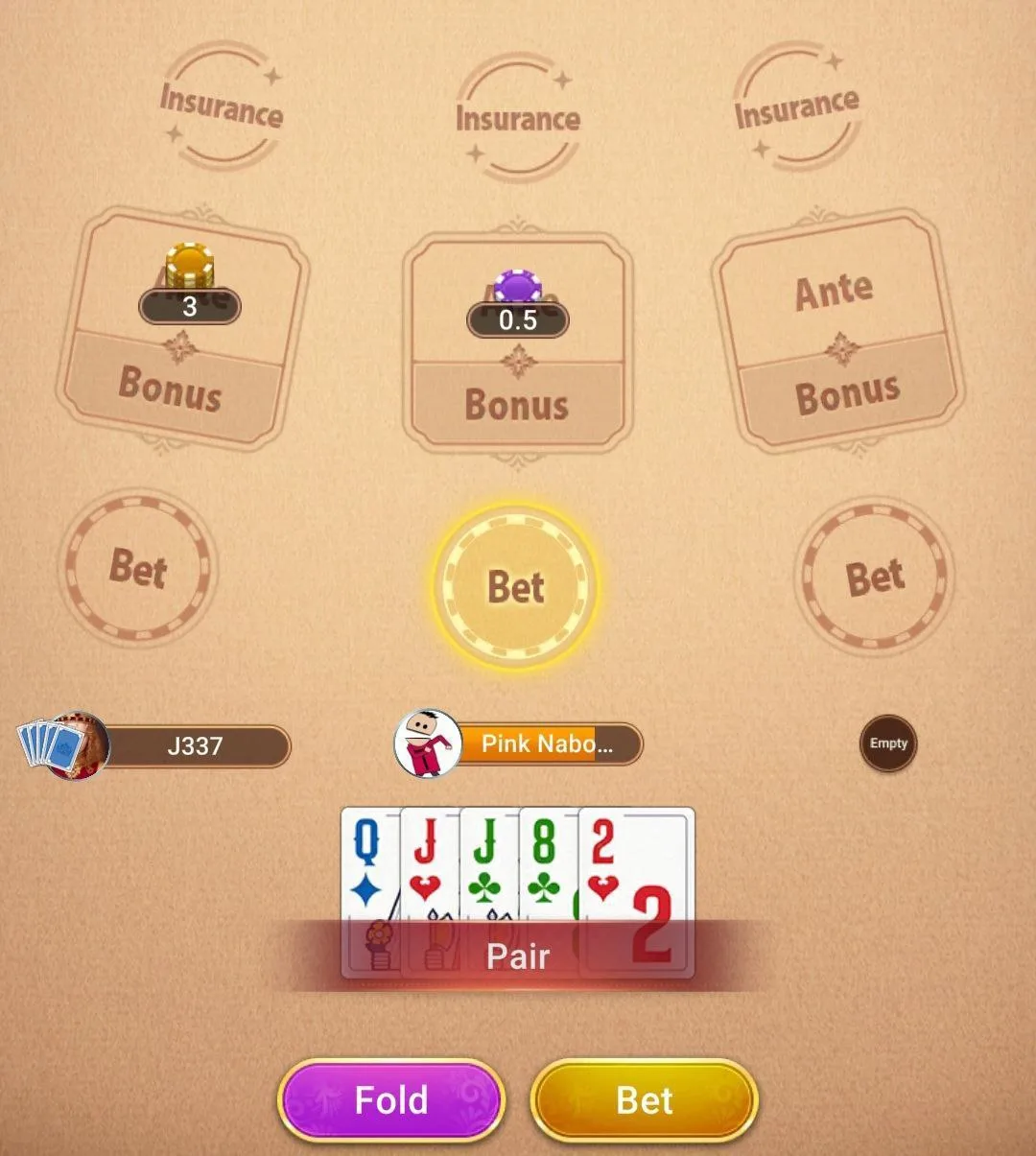
Russian poker at NUTS is a game against the dealer. I run the dealer desk, and the same hands show up all evening: someone buys a sixth card on a gutshot, or exchanges all five while holding an ace. Below are the table rules and the basic line we teach in the first hour. This is not hold'em against a neighbor. There are no community cards. There is no river bluff that makes the next seat fold. The dealer does not muck because you bet. The dealer plays the hand out under the qualify rule.
What is on the table before you choose
The hand starts with an ante. The table in the lobby shows the ante size. I am not pricing that ante in dollars here, because limits differ and this page should not pretend to be the table plaque. After the ante you receive five closed cards. Then there are four branches. You can fold. You can bet. You can exchange one to five cards. You can buy a sixth card for an extra ante. The sixth card costs another ante, not a separate secret amount.
The dealer receives five cards and opens one. The dealer qualifies only with ace-king or better. A dealer hand worse than ace-king does not play. If the dealer does not qualify, the player keeps the bets, and the ante is paid even money. That is the usual case: the usual ante pay in this spot is 1:1. The word usually is doing real work. The source of truth is the table hint in the lobby. If the hint and this paragraph disagree, sit by the hint, not by memory of the article.
Two different outcomes
First outcome: the dealer never reached ace-king. Your bets stay with you, and the ante is paid even money, usually 1:1. That is not a payout from the hand table. Pair, two pair, and the bigger hands do not switch on in this outcome. You did not win a full house against a dealer who failed to qualify. You kept what you bet, and the ante was paid at even money.
Second outcome: the dealer qualified. Your best hand is then compared with the dealer's hand, and a winning combination is paid from the table. The list below is typical. The lobby of a given table can differ. Open the hint before you sit. If that table shows other odds, those odds are the ones in force.
- Pair — 1:1.
- Two pair — 2:1.
- Trips — 3:1.
- Straight — 4:1.
- Flush — 5:1.
- Full house — 7:1.
- Quads — 20:1.
- Straight flush — 50:1.
The typical table is a guide so a new player has something to compare with the hint. It is not a price stamped on every table in club 111777. Quads and a straight flush pay large numbers because they are rare. First look for an ace or a king, and remember that one open dealer card is not the whole dealer hand. It is already part of the decision, not decoration.
The basic line for the first hour
Fold junk that has no ace and no king. Scattered low cards do not become a hand because the ante is already in the middle. The ante bought the right to see five cards. It did not create a duty to buy a sixth. A medium pair is a different story. A pair of eights can still win the hand when the dealer fails to qualify. Do not muck a medium pair only because it looks modest next to someone else's full house from an hour ago.
Buy the sixth card only with a four-card flush or a four-card straight that is open on both ends. A gutshot — a hole in the middle, one rank that completes it instead of two open ends — is not a buy. We see the extra ante spent on a gutshot every night at the dealer desk, and the line is simple: do not buy it. Four cards of one suit, or an open straight draw, is a buy if you are willing to pay one more ante for one attempt to get there. That purchase does not replace a made hand you already like.
The exchange runs from one card to five, but do not exchange all five if you hold an ace or a king. Keep the high card and exchange what does not belong with it. Throwing the ace away with the trash and drawing five new cards is how you lose the only card that mattered for the dealer's qualify rule and for your own hand. The table hint will not count the leftovers for you. The hour's rule is one line: an ace or a king does not leave in a pack of five.
How a live hand looks
First example. Five closed cards, no ace, no king, no pair, suits broken. That is junk. Fold. Do not buy a sixth card in case it somehow connects. Exchanging all five is allowed by the ace-king rule here, because you have neither, but junk with no high card is often cheaper to fold than to pay for a fresh set. A fold does not return the ante as a side bonus. You left the hand.
Second example. Four cards of one suit and a fifth that does not match. Buying a sixth card for an extra ante matches the line. A four-card gutshot with a hole in the middle does not, even when the hole feels close. Third example. A pair of queens with trash around it. That is not an automatic fold: the dealer may still fail to qualify, and then you keep the bets while the ante is usually paid 1:1. You also may not exchange all five while you hold queens, for the same reason you do not exchange all five with an ace. What is high in the hand stays in the hand.
Where the table is, and what it is not
Russian poker tables sit in the lobby of club 111777. The hint on the table outranks every paragraph above, including the word usually next to 1:1. If you are not in the club yet, the path is the join guide: send your User ID to @NUTSsup, and fund through the bot @nuts111777bot or through the same manager. Questions that repeat in chat are in the FAQ.
This format is easy to treat as a rest from hold'em and then to pour the cash bankroll into it. The Russian poker pile stays separate. How many buy-ins to keep for hold'em is in bankroll management. CRASH is a third game in the same lobby, with a timer and its own session cap. Do not open it to win the ante back. The pointer for that game is CRASH. Why a gutshot for an extra ante is a weaker buy than four cards to a flush, without an invented table percentage, is the idea behind the EV article.
The page in one picture
dealer
you play against the dealer, not a neighbour
AK+
the dealer qualifies with ace-king or better
lobby
the pay table beats this article
ante
this page does not print a price
Short answers
Who are you playing?
The dealer. The players beside you are not your opponents in the hand.
When does the dealer play?
With ace-king or better. Otherwise the dealer hand does not qualify.
Which pay table is right?
The one in that table's lobby. The figures in the article are a typical guide.
What does the ante cost?
This page does not print a price. The table shows it before you sit.